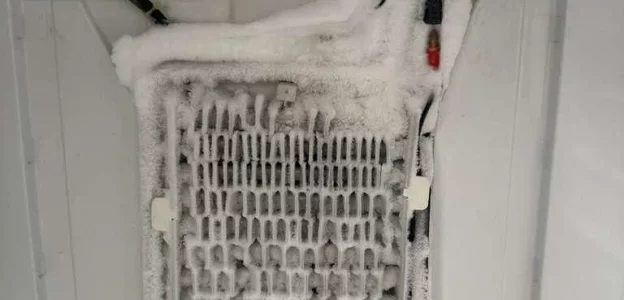
Ice buildup inside a refrigerator may look harmless at first. Some homeowners think the fridge simply needs to be unplugged for a few hours, cleaned, and turned back on. In some cases, that may temporarily remove the ice. But if the evaporator coils are covered with frost or solid ice, the real problem is often deeper.
A refrigerator is designed to remove heat from inside the cabinet and keep food at a safe temperature. The evaporator coils play a key role in this process. When these coils become blocked with ice, the refrigerator can no longer move cold air properly. As a result, cooling becomes weak, uneven, or stops completely.
Professional evaporator coil defrosting is not just about melting ice. It is about finding out why the ice formed in the first place.
What Are Refrigerator Evaporator Coils?
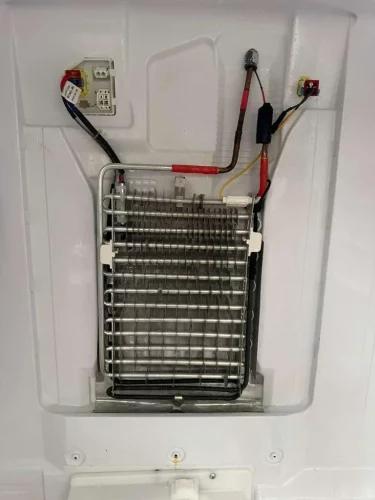
Evaporator coils are part of the sealed cooling system inside the refrigerator or freezer section. Their job is to absorb heat from the air inside the appliance. As the refrigerant moves through the coils, the coils become very cold. A fan then helps circulate cold air through the refrigerator and freezer compartments.
Under normal conditions, a small amount of frost may appear on the coils during operation. The refrigerator’s automatic defrost system is supposed to melt that frost at regular intervals. This keeps the coils clear and allows the appliance to cool efficiently.
When something goes wrong with the defrost system, frost does not melt properly. Over time, it builds up layer by layer until the coils are packed with ice.
Why Ice Buildup on Evaporator Coils Is a Serious Issue
Ice on evaporator coils blocks airflow. Even if the refrigerator is still running, cold air cannot circulate the way it should. This can cause the fridge section to become too warm while the freezer may still seem cold for a while.
The longer the issue is ignored, the more stress is placed on the appliance. The compressor may run longer than normal. The fan may struggle to move air through the frozen coils. Food may begin to spoil because the refrigerator cannot maintain the correct temperature.
In many cases, the refrigerator does not fail all at once. It slowly loses cooling performance. That is why many homeowners notice the problem only when food starts warming up or the fridge runs constantly.
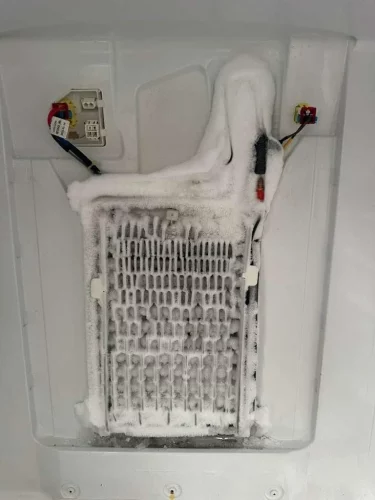
Common Signs Your Evaporator Coils May Be Frozen
A refrigerator with frozen evaporator coils may show several warning signs. The most common one is poor cooling in the fresh food section. You may also notice that the freezer is colder than usual, but the fridge side is not cooling properly.
Another sign is weak airflow from the vents. If you place your hand near the air vents and barely feel cold air, ice may be blocking the evaporator area. In some cases, you may hear the fan running, but the air still does not move through the appliance correctly.
Other possible signs include:
Refrigerator runs almost nonstop
Food spoils faster than usual
Frost or ice appears on the back panel inside the freezer
Unusual fan noise
Water leakage after partial melting
Ice returns soon after manual defrosting
If the ice comes back after you unplug and defrost the refrigerator, this usually means the root cause has not been fixed.
Why Simply Unplugging the Refrigerator Is Often Not Enough
Unplugging the refrigerator can melt the visible ice, but it does not repair the defrost system. This is one of the most common mistakes homeowners make.
After the ice melts, the refrigerator may start cooling again for a few days or weeks. But if the defrost heater, sensor, thermostat, control board, or fan has a problem, the same issue will return. The coils will freeze again, airflow will become blocked again, and the refrigerator will stop cooling properly again.
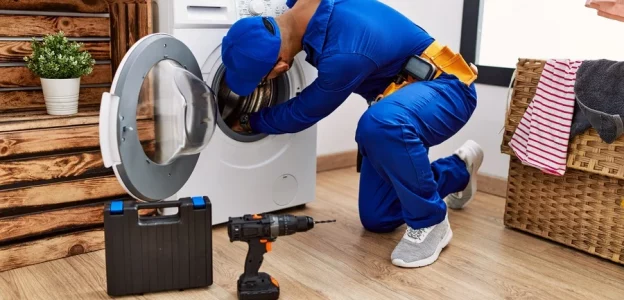
That is why professional diagnosis is important. A technician does not only defrost the coils. They check the parts that control the defrost cycle and determine why the ice buildup happened.
Common Causes of Frozen Evaporator Coils
Several problems can lead to ice buildup on refrigerator evaporator coils.
One of the most common causes is a failed defrost heater. This part is responsible for melting frost from the coils during the automatic defrost cycle. If the heater does not work, frost continues to build up.
A faulty defrost thermostat or sensor can also cause the problem. These parts help the refrigerator detect coil temperature and control when defrosting should happen. If they send incorrect readings, the defrost cycle may not start or may stop too early.
Another possible cause is a bad control board. Modern refrigerators rely on electronic control boards to manage cooling and defrost timing. If the board fails, the defrost system may not receive the correct signal.
Airflow problems can also contribute to ice buildup. A failing evaporator fan, blocked vents, damaged door gasket, or frequent warm air entering the refrigerator may create conditions where frost forms faster than normal.
What Happens During Professional Evaporator Coil Defrosting?
Professional evaporator coil defrosting is more than melting ice with heat. A technician first inspects the refrigerator to confirm where the ice is located and how severe the buildup is.
The freezer panel may need to be removed to access the evaporator coils. Once the coils are visible, the technician can safely defrost the ice without damaging wiring, plastic panels, sensors, or the coil itself.
After the ice is removed, the technician checks the main defrost components. This may include testing the defrost heater, thermostat, sensor, fan motor, wiring, and control board. The goal is to identify the failed part before the refrigerator freezes up again.
This approach helps prevent repeat breakdowns and protects the appliance from unnecessary stress.
Why You Should Not Ignore Ice on Evaporator Coils
Ignoring frozen evaporator coils can lead to bigger and more expensive problems. When airflow is blocked, the refrigerator has to work harder to keep the correct temperature. This increases wear on the compressor and other major components.
Food safety is another concern. A refrigerator that is not cooling properly may not keep food at a safe temperature. Even if the fridge feels slightly cool, it may still be too warm for meat, dairy, and other perishable items.
The longer the refrigerator runs with restricted airflow, the higher the risk of a major breakdown. A repair that could have been limited to the defrost system may turn into a more expensive cooling issue.
Can You Defrost Evaporator Coils Yourself?
You can unplug the refrigerator and let the ice melt, but this should be viewed only as a temporary step. It may help in an emergency, especially if the fridge is not cooling at all. However, it does not explain why the coils froze.
Using sharp tools to remove ice is not recommended. Evaporator coils and refrigerant lines are delicate. Puncturing a coil can cause a refrigerant leak and may turn a repairable refrigerator into a much more expensive problem.
Using excessive heat can also damage plastic parts, insulation, wiring, or sensors. Professional tools and proper technique matter.
If the ice buildup returns, or if the refrigerator stops cooling again after defrosting, the appliance should be inspected by a technician.
When to Call a Refrigerator Repair Technician
You should call a professional if your refrigerator is not cooling properly, if frost keeps forming on the back freezer panel, or if ice returns after manual defrosting.
A technician can determine whether the issue is related to the defrost heater, thermostat, sensor, control board, evaporator fan, door gasket, or another component. This saves time and helps avoid replacing parts blindly.
It is also better to call for service early. Once the refrigerator has already stopped cooling, food may spoil quickly, and the compressor may already be under heavy stress.
Professional Refrigerator Defrost and Repair Service
Ice buildup on refrigerator evaporator coils is not just a cleaning issue. It is usually a sign that the appliance needs proper diagnosis. Removing the ice is only the first step. The real solution is to find and repair the reason the ice formed.
Solo Appliance Repair can professionally defrost refrigerator evaporator coils, inspect the defrost system, and repair the faulty parts before the issue turns into a major breakdown.
If your refrigerator is not cooling properly, has frost buildup, or keeps freezing behind the freezer panel, schedule a professional diagnosis.
Call: (888) 390-7333
Book a technician online: https://soloappliancerepair.com/